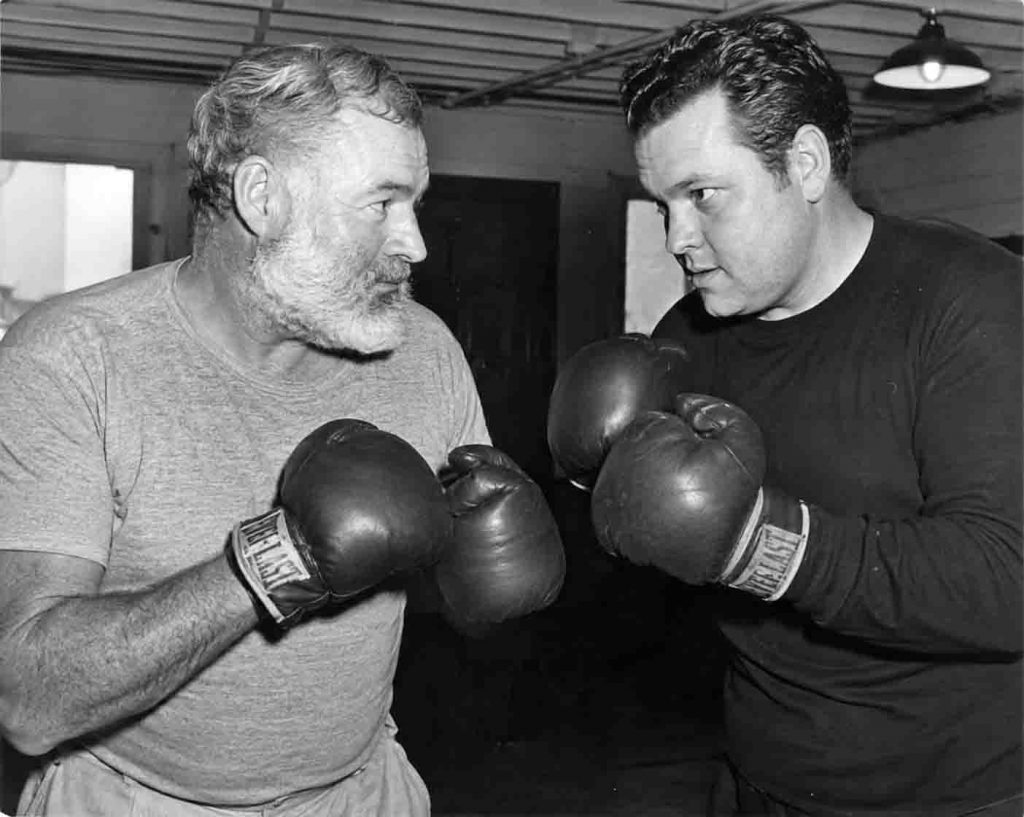
Ernest Hemingway und Orson Welles schenken sich nichts. Auch wenn es davon kein Foto gibt. Nur eine KI-Montage. Foto: AI-ChatGPT.
Als sich Ernest Hemingway und Orson Welles zum ersten Mal begegnen, prallen zwei Naturgewalten aufeinander. Der eine: ein Großwildjäger, Kriegsreporter, Meister der knappen Sätze. Der andere: ein Wunderkind des Kinos, Stimmenmagier, Egomane mit Shakespeare-Komplex. Beide lieben den Alkohol, den großen Auftritt und die eigene Legende. Dass diese Begegnung irgendwann in einer handfesten Prügelei endet, scheint beinahe zwangsläufig.
Es klingt wie das Drehbuch eines billigen Hollywood-Streifens, doch es hat sich tatsächlich so zugetragen. Im Juli 1937 treffen in einem verdunkelten New Yorker Vorführraum zwei der größten Egos des 20. Jahrhunderts aufeinander. Der literarische Macho Ernest Hemingway und das 22-jährige Wunderkind von Radio und Theater, Orson Welles. Das Ergebnis? Ein handfester Boxkampf, der beinahe die Kinogeschichte verändert hat.
Ernest Hemingway hat das Drehbuch für die antifaschistische Dokumentation The Spanish Earth geschrieben. Da seine eigene Stimme auf den Aufnahmen jedoch zu monoton klingt, engagieren die Produzenten den jungen Orson Welles als Sprecher – ein aufstrebendes Genie, das für seine markante, resonante Stimme bekannt ist.
Mit der Arroganz der Jugend gesegnet, hält Welles den Text von Hemingway für stellenweise zu pompös. Er beschließt, das Skript eigenmächtig zu ändern. Als Ernest den Raum betritt, um sich das Ergebnis anzusehen, ist die Stimmung bereits geladen. Der Autor, der seinen Status als kerniger Naturbursche und Boxer pflegt, verträgt Kritik höchstens in homöopathischer Dosierung – erst recht von einem Kino-Schnösel.
Während Orson Welles eine Passage vorliest, ruft der berühmte Schriftsteller aus dem Dunkeln: „Ein linker Intellektueller will mir erzählen, wie man über Krieg schreibt!“ Orson Welles kontert mit einem spöttischen Kommentar über Hemingways aufgeblasene Männlichkeit. Das ist zu viel für den Kriegsreporter. Der Schriftsteller springt auf, baut sich vor Welles auf und verpasst ihm einen Stoß.
Was folgt, ist kein eleganter Boxkampf, sondern eine chaotische Kneipenschlägerei mitten im Vorführraum. Stühle fliegen, Scheinwerfer wackeln, und auf der Leinwand laufen währenddessen ungerührt die Bilder des Spanischen Bürgerkriegs weiter. Welles beschreibt die Szene später so: „Wir prügelten uns auf dem Boden, umgeben von Bildern sterbender Soldaten. Es war surreal.“
Wie so oft bei Männern dieses Kalibers endet der Sturm so schnell, wie er aufgezogen ist. Nachdem beide Männer Dampf abgelassen haben und sichtlich erschöpft sind, betrachten sie das Chaos. Hemingway, beeindruckt davon, dass der junge Welles nicht einfach das Weite gesucht hat, holt eine Flasche Whiskey hervor. Sie trinken gemeinsam, lesen den Text und schliessen Frieden. Orson darf einige Änderungen beibehalten, doch am Ende spricht Ernest den Kommentar selbst ein – angeblich, weil seine raue Stimme besser zum Dreck des Krieges passt.
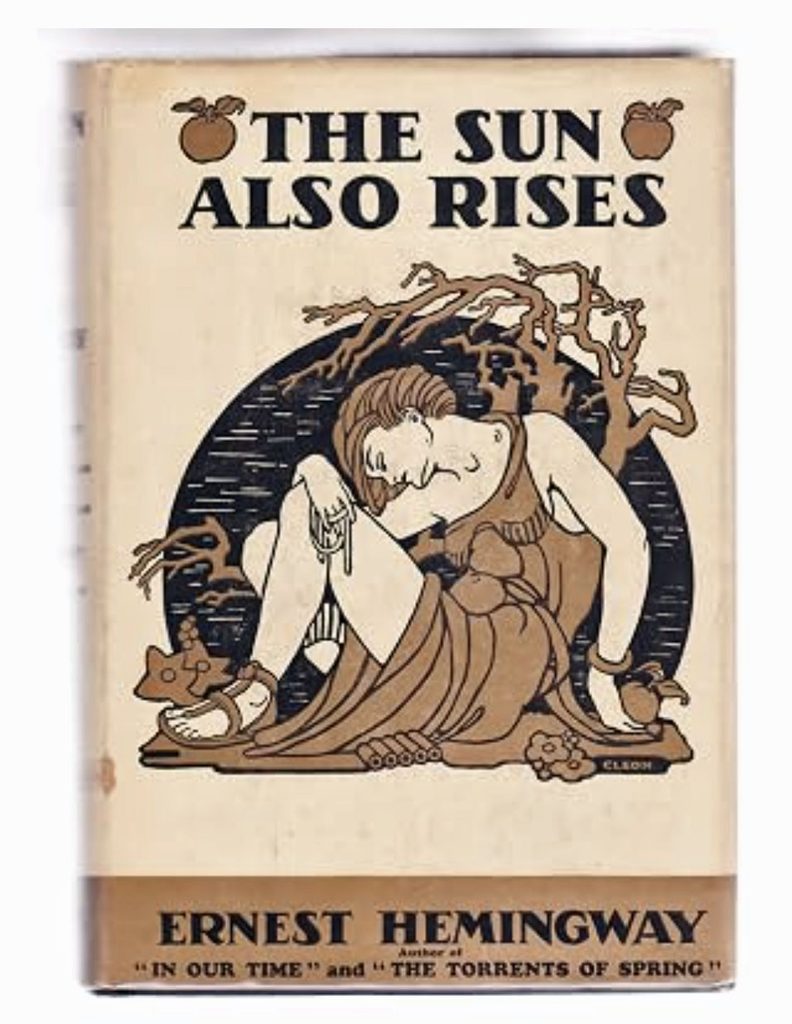
Vor genau 100 Jahren erschien The Sun Also Rises. In Europa heißt der Roman Fiesta. Mit diesem Buch gelingt Ernest Hemingway ein Quantensprung in der englischsprachigen Literatur.
Als im Oktober 1926 sein erster Roman erscheint, beginnt für den ehrgeizigen Neuling eine beispiellose Weltkarriere. Ist Ernest Hemingways Fiesta nach 100 Jahren angestaubt? Von wegen! In Wirklichkeit ist die Erzählung aus Pamplona verdammt aktuell.
Von Wolfgang Stock
Sonntagmittag, 6. Juli, explodierte die Fiesta. Anders kann man das nicht nennen. Ernest Hemingways Stadt heißt Pamplona. In der nordspanischen Kleinstadt lässt der junge US-Autor zu großen Teilen sein Erstlingswerk Fiesta spielen. Hinter den Pyrenäen werden seltsame Volkstraditionen gepflegt. Die Tage sind erfüllt mit gottesfürchtigen Prozessionen und die Nächte mit dem Gedröhne lauter Musikkapellen. Gigantes und Cabezudos, vier Meter hohe Riesenpuppen und heitere Großköpfe, streifen durch die Altstadt. Zwischendurch werden Stoßgebete in einer knorrigen Sprache gen Himmel gesandt, und ansonsten brave Frauen und Männer tanzen außer Rand und Band in Trommeltrance, mit Kränzen aus Knoblauch um den Hals.
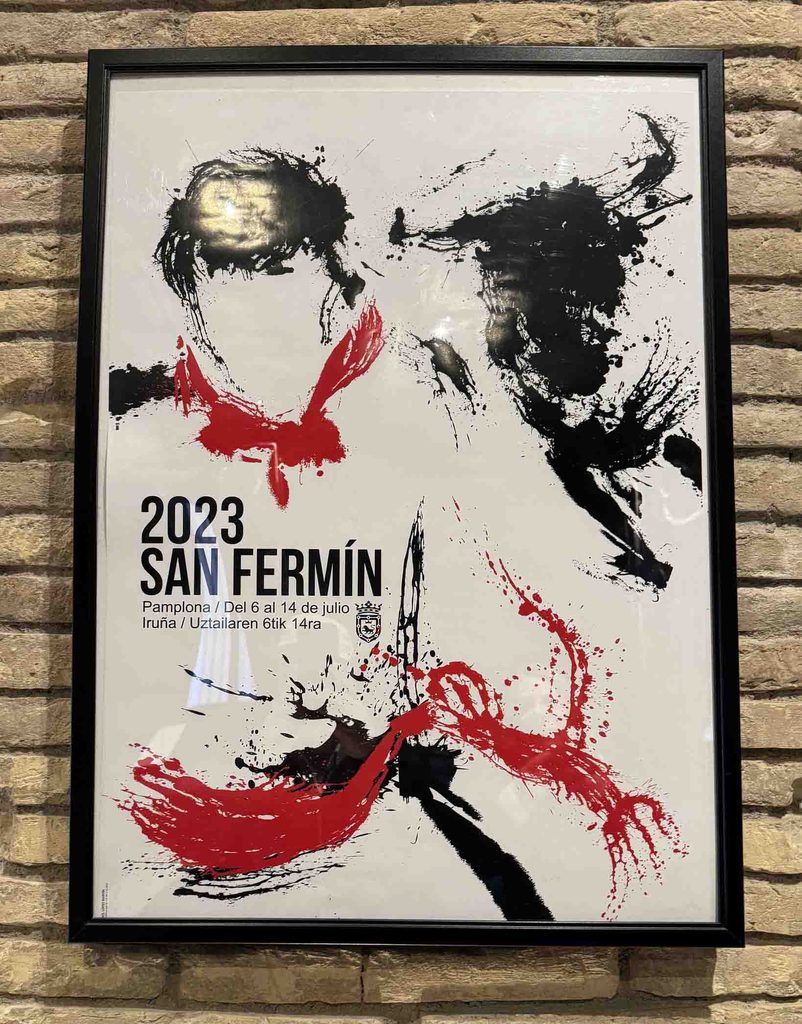
Die Fiesta de San Fermín beginnt alljährlich am 6. Juli mit dem Chupinazo, zu dem am Mittag Feuerwerksraketen vom Rathausbalkon abgeschossen werden. Nach acht Tagen enden die Sanfermines stets am 14. Juli um Mitternacht mit dem vereinten Klagelied Pobre de mí. Ach, ich arme Seele. Um das katholische Fest herum entwirft der 27-jährige Besucher Ernest Hemingway, der damals in Paris lebt, ein Kaleidoskop menschlicher Irrungen und Wirrungen. Im amerikanischen Original heißt der Roman The Sun Also Rises, das Buch wird auf Anhieb ein Riesenerfolg.
Gefeiert wird in Pamplona zu Ehren des heiligen Fermín, des Schutzpatrons von Navarra. Firminus der Ältere ist der Sohn eines römischen Offiziers, er wird zum Priester geweiht und im 3. Jahrhundert zum Bischof von Amiens ernannt. Der fromme Fermín stirbt den Märtyrertod, ihm wird die Kehle durchschnitten. Seine Reliquien werden der Überlieferung nach aus Frankreich in die Heimatstadt überführt. Der Pañuelico – ein rotes Halstuch, das zum Fest getragen wird – erinnert an sein tragisches Schicksal.
Seit 1591 werden in Pamplona die Sanfermines gefeiert, noch älter ist der Lauf vor den Stieren. Ein übermütiges Ritual, das im Mittelalter aus dem Auftrieb des Viehs zum Markt durch Metzgerburschen entstanden ist. Jeden Morgen werden beim Encierro aus den Stallungen im Norden wilde Kampfstiere durch die engen Gassen zur Plaza de Toros gehetzt, wo sie am Abend von den Matadores im Kampf blutig abgeschlachtet werden. Dieses morbide Treiben – als berauschendes Volksfest zelebriert – passt irgendwie gut zu den hoffnungslosen Besuchern aus Paris und zu den dunklen Wolken, die über Europa hängen.
Zum ersten Mal kommt der junge Hemingway im Juli 1923 nach Pamplona. Der Autor aus einem verschlafenen Vorort von Chicago, er ist vom Jahrgang 1899, zeigt sich bei seinem Trip in die Hauptstadt Navarras elektrisiert von dem mittelalterlichen Schauspiel. Zwischen 1923 und 1959 hat er die Stadt zehnmal besucht, mit einer langen Pause von anderthalb Jahrzehnten nach dem verlorenen Bürgerkrieg. Ab 1953 ist der Schriftsteller dann wieder häufig in Nordspanien.
Der Lautsprecher einer verlorenen Generation
Die Veröffentlichung im Oktober 1926 wirkt wie ein Paukenschlag. Mit The Sun Also Rises erreicht die literarische Moderne einen neuen Markstein. Ein neuer Stoff, ein neuer Stil, ein neuer Autor. Ungeschminkt fängt ein vorlauter Kerl den Defätismus und die wabernde Untergangsstimmung nach dem Ersten Weltkrieg in einer forschen Erzählung ein. Stürmisch vergnügt man sich in den Roaring Twenties, doch vieles bleibt schöner Schein. Tief im Innern erblicken wir eine bedrückte und verlorene Generation.
Der Ausdruck You are a lost generation geht zurück auf Gertrude Stein, eine einflussreiche Mäzenin, die mit einem literarischen Salon in der Rue de Fleurus Hof hält. Die Schriftstellerin aus Pittsburgh umschreibt derart den Zynismus ihrer Zeitgenossen, hervorgerufen durch den Zivilisationsbruch in den Jahren von 1914 bis 1918. Von ihr, sie wird Hemingways Mentorin, hat Ernest den Tipp erhalten, den Encierro zu besuchen. Gertrude Stein und ihre Gefährtin Alice Toklas kennen das Spektakel seit 1915. In jenen Tagen ist das Fest in Nordspanien ein lokales Ereignis in der damals 35.000 Einwohner zählenden Provinzstadt.
Nach dem großen Krieg in Europa sind die zuversichtlichen Aufbruch-Werte der weitgehend friedfertigen Belle Époque mit einem Mal wie weggeblasen. Was zählen die Erfindungen wie Flugzeug, Automobil und Ozeandampfer angesichts des schrecklichen Krieges? Die Schlacht mit ihren Grabenkämpfen ist abscheulich gewesen. Und am Ende stehen alle als Verlierer da. Deutschland mit Hyperinflation, Reparationen und einer noch größeren Tragödie vor Augen. Auch der Gewinner, die USA, sehen einem düsteren Jahrzehnt entgegen, das 1929 in der Weltwirtschaftskrise detonieren wird.
Eigentlich wäre die Aufgabe von Politik und Gesellschaft, ein friedvolles Wertesystem aufzubauen. Jedoch fehlt dieser kleinmütigen Generation dazu die Kraft. Die labile Zeit braucht kulturelle Vorkämpfer und neue Blickwinkel, durchaus von Tradition gespeist, die Menschen dürstet es nach einem Neustart mit ehrlicher Inventur und mutigen Idealen. Ebenso wie das Themen-Panorama sich öffnen und weiten muss. Und so geht es vor exotischer Kulisse in Fiesta vor allem um die Sinnsuche in Zeiten der Orientierungslosigkeit.
Literarisch ist Hemingways Roman ein revolutionärer Aufschlag Mitte der 1920er Jahre. Während viele Kollegen noch der aufgesetzten Blümchen-Prosa der viktorianischen oder wilhelminischen Epoche nachhängen, schildert der ehrgeizige Arztsohn in seiner Erzählung knallhart die innere und äußere Zerrissenheit der Menschen nach dem Ersten Weltkrieg. Seine spröden Sätze wirken echt und treffen den Nerv der ratlosen jungen Männer und Frauen. Keiner fängt die gallige Atmosphäre so treffsicher ein wie der Amerikaner. Ein Draufgänger wie er ist sehnsüchtig erwartet worden.
Ein Jahr später wird der Roman in Großbritannien verlegt, überraschenderweise unter einem anderen Titel. Der Verlag Jonathan Cape aus London kann mit dem aus einer Bibelzeile entlehnten Buchtitel wenig anfangen. Im Gegenteil, man fürchtet einen Misserfolg, wenn das Buch hinter einem religiösen Zitat läuft. Und so tauft ihn das englische Verlagshaus dummerweise in Fiesta um. Die meisten anderen Verlage in Europa – Deutschland, Spanien und Italien vorneweg – entscheiden sich ebenfalls für Fiesta anstatt des poetischen The Sun Also Rises.
Ein Epochenporträt zwischen Krieg und Krisen
Vor dem Hintergrund des archaischen Bullen-Boheis lässt der Romandebütant allerlei freizügige Eskapaden ablaufen, es kommt eh nicht mehr drauf an. Die Protagonisten in Fiesta – der impotente Jake Barnes, ein erfolgloser Schriftsteller namens Robert Cohn und die liebestolle Lady Brett Ashley – lassen kein Laster aus in Pamplona: Prügeleien, sexuelle Ausschweifungen und vor allem Alkohol bis zum Abwinken. Dem biederen Publikum in der Heimat fährt der Schreck in die Glieder, es ist das Jahrzehnt der Prohibition in den USA.
Das Café Iruña in Pamplona spielt die heimliche Hauptrolle in Fiesta. Dieses Restaurant dient den Besuchern aus Übersee als Stützpunkt, von dort schwärmen sie aus in die bizarre Zügellosigkeit. Nach dem Essen gingen wir hinüber ins Iruña. Es war schon ziemlich voll, und als der Beginn des Stierkampfs nahte, wurde es noch voller, und die Tische wurden dichter zusammengeschoben. Ein dichtes Summen lag in der Luft, wie jeden Tag vor einem Stierkampf. Dieses Geräusch herrschte zu keiner anderen Zeit in dem Café, ganz gleich, wie voll es war. Das Summen hielt sich, und wir waren mittendrin und ein Teil davon.
Kein Fabulieren im Elfenbeinturm, sondern als Autor mittendrin im Geschehen und gar ein Teil davon. Die Leser sind beeindruckt, wie dieser Debütant aus dem Mittelwesten der USA mit Haut und Haaren hineinspringt in diesen fremden Kosmos. Der neuartige Stil der Erzählung gleicht einer Revolution: kühl, ohne Schnörkel, frei von jeder Wertung, alles weit weg von dem üblichen Erziehungs-Habitus. Das Geschehen wird zudem durch persönliches Erleben begründet, der Autor hat alles mit eigenen Augen gesehen. Hemingway, der in den 1920ern sieben Jahre in Europa gelebt hat, vermag messerscharf zu beobachten und in seinen Dialogen die ätzende Stimmung auf den Punkt abzubilden.
Bereits bei seinem Debüt legt Ernest Hemingway wenig Wert darauf, mit Glorienschein dazustehen, so wie mancher Kollege. Über seine Romanfiguren macht er kein Geheimnis daraus, ein Kerl mit Ecken und Kanten zu sein. Der Mann aus der bigotten Vorstadt gibt gerne den Rabauken und Stiertöter. In Wirklichkeit ist sein Macho-Gehabe reine Fassade, ein Panzer vor Selbstzweifeln und erlittenen Verletzungen. Diese Unvollkommenheit erweist sich für sein Schreiben als Stärke, denn sie ist ein Türöffner. Die Menschen öffnen sich ihm. Dieser Schriftsteller ist nahbar, ohne diese Nahbarkeit wären seine Erzählungen blutleere Kunstgebilde.
Dabei geht es nicht bloß ums Saufen und um Liebschaften. Beim Fest des Heiligen Firminus werden Tugenden sichtbar, die dem Schriftsteller wichtig sind: Mut, Stolz und Würde. Diese verrückte Mischung aus Lebenslust und Todestragik bleibt Hemingways Hochamt, in Pamplona wird sein Wertekanon im Sommer als Schauspiel unter freiem Himmel aufgeführt. Dieser von seiner Endlichkeit bedrückte Lebemann braucht den Trubel. Hinter allem Budenzauber erspürt Ernest den Kampf gegen den mächtigsten aller schwarzen Stiere. Gegen den Tod.
Der spätere Nobelpreisträger skizziert in Fiesta mit dickem Stift zwei, drei Wege zur Befriedigung. Das Hinauswagen auf unbekanntes Terrain, die arglose Entdeckerfreude und die Neugier auf eine fremde Kultur. Andere Menschen und ihre Gepflogenheiten zu verstehen und wertzuschätzen. Und über allem: Die Anmut der Schöpfung zu erkennen. So wird Pamplona im Juli zum heiligen Termin im Kalender des US-Amerikaners. Bis zuletzt. Im Frühsommer 1961, er ist seit Monaten depressiv und leidet an Verfolgungswahn, wird der Nobelpreisträger ein Telegramm nach Spanien senden. Er wird die Sanfermines für sich und Miss Mary stornieren, die Reservierung im Hotel, die guten Plätze an der Barrera in der Stierkampfarena.
Am 7. Juli 1961, morgens um acht Uhr, laufen in Pamplona nach Eröffnung der Sanfermines die ersten schwarzen Bullen durch die Gassen der Altstadt. Am anderen Ende der Welt, in Idaho am Rande der Rocky Mountains, wird auf dem Dorffriedhof von Ketchum an diesem Freitag ein wuchtiger Sarg in die Erde eingelassen. Mit jenem Mann, der für alle Zeiten die Sanfermines populär gemacht hat.
Ein Mensch sucht seinen Frieden
Der Blick von der Terrasse des Café Iruña schweift noch immer über die monumentale Plaza del Castillo. Von der Belle Époque bis heute scheint die Zeit in Pamplona wie gefroren. Marmortische, goldfarbene Säulen, Riesenspiegel, prächtige Kronleuchter im Modernisme. Auf der langen Theke erstrecken sich die Schalen mit Rollitos de Queso, den Patatas Bravas und dem Jamón Ibérico. Das Café Iruña bleibt der Ruhepol, der Tradition und Moderne zusammenbringt. Dieser Ort dient als Kraftquelle, an der man sich seiner selbst vergewissert, um den kleinen und großen Herausforderungen des Alltags zu trotzen. In diesem Sinne hat Ernest Hemingway seinen Roman Fiesta angelegt.
Das Iruña hat Terror und Tyrannei erlebt, und dennoch steht das Bauwerk am großen Platz majestätisch da, frohgemut und unversehrt, seit 140 Jahren, und um die gute Stube herum spielt sich das kleine Leben ab. Ernest Hemingway, fortwährend ein Suchender, nähert sich in Pamplona seiner Seele. Er findet jene kleine Glückseligkeit, die ein Mensch wie er so braucht. Gutes Essen, reichliche Prozente, Geselligkeit und ein wenig Krawall. Dieser Haudegen mag das Leben und er kostet es aus. Deshalb fällt es ihm so schwer, sterben zu müssen.
Aber da ist mehr. Die Sanfermines sind ein Trubel, der in die Knochen geht. Nach der Fiesta nimmt der Schriftsteller eine Auszeit und fährt hinein in die Stille der Pyrenäen. Am Rio Irati und Rio Urrobi, an den einsamen Bächen rund um das Kloster Roncesvalles gibt er sich der Angelleidenschaft hin. Im Kontrast zum Mordskrach unten in Pamplona geht der Blick nun nach oben. Zum ersten Mal bestaunt die Leserschaft in Fiesta den Zwiespalt, der für Hemingways Werk so typisch werden sollte. Auf der einen Seite das Karussell von Laster und Eitelkeit, das sich um Alkohol, Stierkampf, Krieg und Tod dreht. Auf der anderen Seite die Vergötterung der Natur, die hohen Berge und die grünen Wälder, wo es unverfälschte Erdverbundenheit zu entdecken gilt.
Der hochgewachsene Naturbursche vom Michigan-See braucht das laute Fest, um sich des Lebens zu vergewissern. Genauso wie er die Stille der Natur benötigt, um zur Gemütsruhe zu gelangen. Diese arme Seele sucht Halt in den Gebräuchen, am liebsten in Spanien. Die lebenszugewandte Tradition der Sanfermines, die seit dem Mittelalter tief bei den Bewohnern der Region verwurzelt ist, hilft dabei. Ebenso wie die Stille der Natur. Es bleibt ein steiniger Weg: Dieser Mensch muss seine Mitte finden.
Sieht er eine Hoffnung? Ernest Hemingway, eine Art
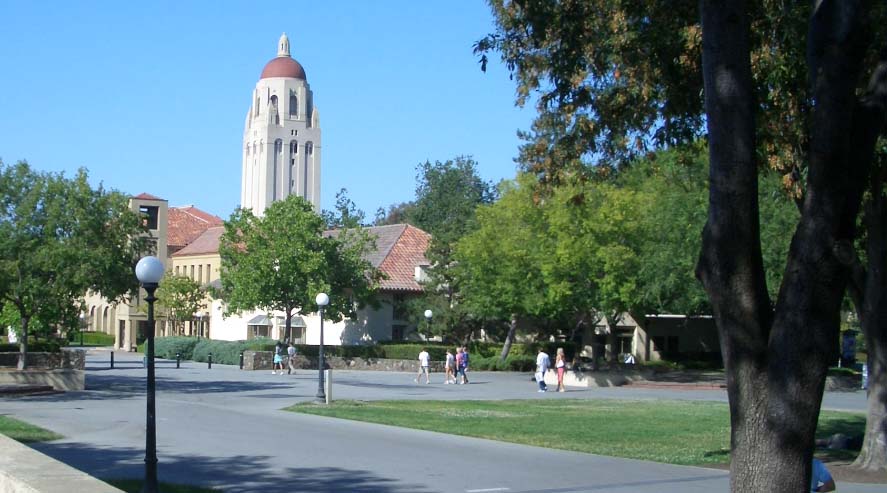
Die Spitze. Campus der Stanford University in Palo Alto/California. Foto: W. Stock, 2005.
Es ist eine interessante Tatsache, dass einige der bedeutendsten Schriftsteller der Literaturgeschichte nie eine Universität besucht haben. Oder ihr Studium frühzeitig abgebrochen haben. Auch wenn es wenige sind, es gibt sie. Kein Akademiker, trotzdem Literatur-Nobelpreis.
Die meisten Preisträger hatten zumindest irgendeine Form von Hochschulbildung (auch wenn sie abbrachen oder nie abschlossen). Bei anderen jedoch steht kein einziger Tag an einer Universität zu Buche. Diese Schriftsteller bildeten sich meist als Autodidakten in Bibliotheken, auf Reisen oder durch handwerkliche Berufe weiter.
Hier eine Auswahl bekannter Literatur-Nobelpreisträger, die ohne akademischen Grad blieben:
Rudyard Kipling (Nobelpreis 1907) besuchte nur Schulen, ein Stipendium für eine Universität wurde ihm nicht zugeteilt. Der in Bombay geborene Brite fing als Journalist in Indien an.
Knut Hamsun (Nobelpreis 1920): Der Norweger wuchs in ärmlichen Verhältnissen auf und arbeitete als Gemeindeschreiber und Straßenbahnschaffner, bevor er als Schriftsteller bekannt wurde.
George Bernard Shaw (Nobelpreis 1925) hasste das formale Ausbildungssystem und verließ die Schule mit 15 Jahren. Der aus Dublin stammende Brite bildete sich selbst in der British Museum Library weiter und bezeichnete Schulen später als „Gefängnisse“.
Grazia Deledda (Nobelpreis 1926): In ihrer Heimat Sardinien war für Mädchen damals nach der Grundschule Schluss. Sie bildete sich privat weiter und wurde als erste Italienerin mit einem Nobelpreis ausgezeichnet.
Harry Martinson (Nobelpreis 1974): Der Schwede wuchs als Waisenkind auf, das mit 16 Jahren zur See fuhr und jahrelang als Heizer und Matrose arbeitete. Seine Universität war der Ozean.
Joseph Brodsky (Nobelpreis 1987) verließ die Schule mit 15 Jahren in der Sowjetunion und arbeitete in verschiedensten Berufen (u. a. im Leichenschauhaus und in Fabriken), während er sich selbst Literatur und Sprachen beibrachte.
José Saramago (Nobelpreis 1998): Aufgrund der Armut seiner Familie konnte er kein Gymnasium besuchen und machte stattdessen eine Ausbildung zum Schlosser. Der Portugiese war ein klassischer Autodidakt.
Doris Lessing (Nobelpreis 2007) verließ mit 14 Jahren die Schule. Nach harter und schwieriger Jugend ergab sich für die Britin kein Studium.
Ernest Hemingway (Nobelpreis 1954): Der Sohn eines Arztes und einer Opernsängerin ging direkt nach der High School als Lokalreporter zur Zeitung Kansas City Star. Ein Studium war nicht sein Ding, der im Mittelwesten der USA aufgewachsene Naturbursche suchte die Ausbildung im „echten Leben“.
Jetzt gibt es doch noch eine Überraschung. Der mit akademischer Aura auftretende Kaufmannssohn Thomas Mann (Nobelpreis 1929) galt als mäßiger Schüler. Der Lübecker verließ das Gymnasium vorzeitig ohne Abitur und besuchte später lediglich als Gasthörer einige Vorlesungen an der TH München, ohne ein ordentliches Studium abzuschließen.
Diese Beispiele – die Liste ist nicht vollständig – zeigen, dass akademische Bildung nicht selbstverständlich ist. Selbst für Nobelpreisträger. Für die höchste literarische Auszeichnung bleiben
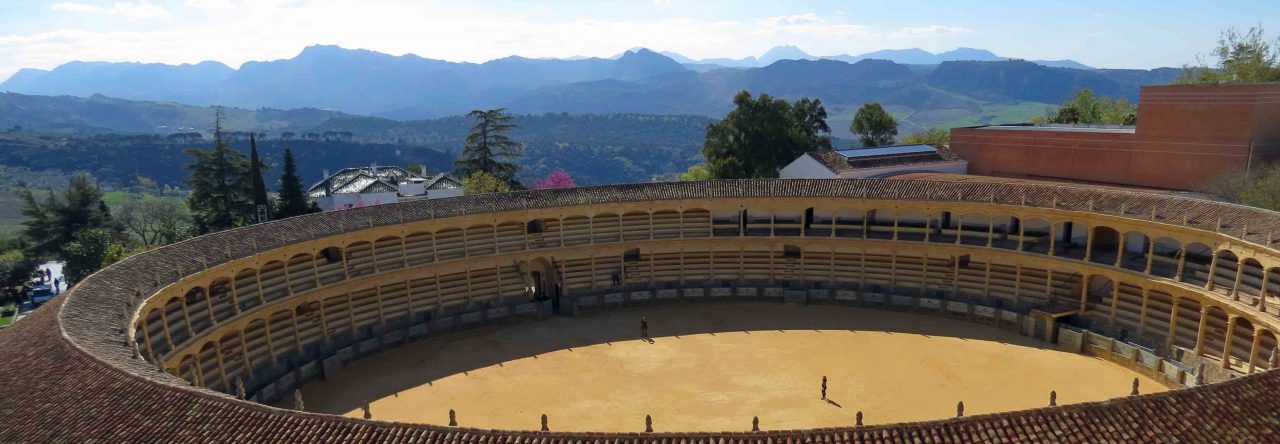
San Fermín in Pamplona – ein tief verankertes Volksfest zwischen Andacht und Radau. Foto: W. Stock, 2024.
The Fighter Hemingway feels it from the grave every time the bulls run through the streets of Pamplona again he sits up the skeleton rattles the skull wants a drink the eyeholes want sunlight the young bulls are beautiful, Ernest and you were too no matter what they say now.
Dieses kraftvolle Gedicht von Charles Bukowski lässt Ernest Hemingway für einen Moment wieder auferstehen: Mitten im Juli, wenn in Pamplona das berühmte Encierro die Altstadt erschüttert. Die Sanfermines, die Hemingway zu Weltruhm verhalf, sind tief in der Seele des Nobelpreisträgers verwurzelt. Bukowski zeichnet diese metaphysische Verbindung auf meisterhafte Weise nach.
Obwohl das Gedicht vor Hochachtung und kühler Sympathie sprudelt, war Bukowskis Beziehung zu seinem literarischen Vorgänger keineswegs frei von Reibung. Anfänglich beäugte er Hemingways inszenierte Männlichkeit und dessen betont lakonischen, hartgesottenen Schreibstil mit einer gewissen Skepsis. Erst mit den Jahren wandelte sich dieser Vorbehalt in eine tiefe und ehrfurchtsvolle Bewunderung.
Bukowski erkannte unter der rauen Oberfläche die schonungslose Ehrlichkeit und eine poetische Radikalität, die seiner eigenen Ästhetik näher war, als er es sich lange eingestehen wollte. Am Ende erweist hier ein literarischer Außenseiter dem anderen die Ehre.
Bukowski zeichnet das Bild zweier geistesverwandter Seelen: Zwei kompromisslose Giganten des US-amerikanischen Realismus, die das Leben
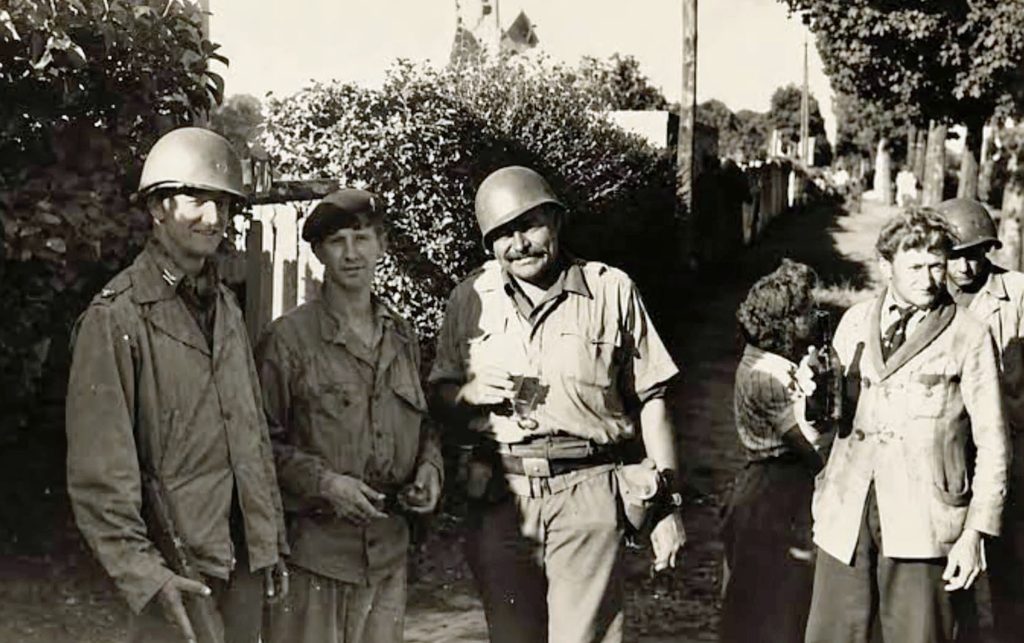
‚Oberst‘ Ernest Hemingway bei Rambouillet, August 1944. Credit Line: Ernest Hemingway Photograph Collection, John F. Kennedy Presidential Library and Museum, Boston.
Erst sechs Wochen nach der Invasion in der Normandie wird Ernest Hemingway im Zweiten Weltkrieg seinen Fuß auf französischen Boden setzen. Mit einem Truppentransport über den Ärmelkanal nach Néhou. Dort schließt sich Ernest Hemingway Ende Juli 1944 amerikanischen Bodentruppen an, die sich auf die französische Hauptstadt zubewegen. Der berühmte Reporter erhält einen eigenen Jeep mit persönlichem Fahrer.
Mehr als einmal setzt sich der Kriegskorrespondent mit seinem Chauffeur Archie Pelkey von den Einheiten ab, um eigenmächtig die Gegend auszukundschaften. Als Berühmtheit kann er sich einiges herausnehmen, doch er treibt seine Dreistigkeit auf die Spitze. Frech bittet der Reporter, angeblich mit Unterstützung von General Patton, den französischen Kommandeur Jacques-Philippe Leclerc im Gespräch um ein paar Soldaten. Mit diesen will Ernest in Paris zum Ritz an der Place Vendôme vorstoßen und das weitläufige Luxushotel freikämpfen. Genervt schlägt der General den Wunsch des Zivilisten ab.
In dem Sektor, in dem Hemingway operiert, stoßen die Amerikaner bei ihrem Vorrücken auf wenig Widerstand. Der berühmte Kriegsreporter plustert sich weiterhin auf und will nach eigenem Gutdünken militärische Aufklärungsarbeit leisten. Gegen alle Vorschriften beschlagnahmt der selbstherrliche Autor ein deutsches Militärkrad mit Beiwagen sowie ein Mercedes-Kabriolett.
Mitte August, nur 60 Kilometer vor Paris, bringt es Ernest Hemingway fertig, dass sich ihm eine versprengte Gruppe von Résistance-Kämpfern anschließt. Der bullige Kriegsreporter dreht jetzt voll auf: Er lässt sich mit Colonel anreden und trägt eine Uniform ohne Rangabzeichen. Ernest und sein Trupp beziehen das Hôtel du Grand Veneur in Rambouillet und lagern dort Vorräte, Waffen, Handgranaten und große Mengen Alkohol.
Natürlich ist es einem offiziellen Kriegskorrespondenten streng verboten, aktiv Soldaten zu führen, taktische Befehle zu erteilen oder selbst Waffen zu tragen. Ernest ist in seinem unbändigen Übermut kaum zu bremsen. „Er hat von nichts anderem geredet“, erinnert sich ein Widerstandskämpfer, „als davon, der erste Amerikaner in Paris zu sein und das Ritz zu befreien.“ Ernest gefällt sich in seiner Rolle als Colonel. Zum Glück geraten ‚Oberst Hemingway‘ und seine Kämpen in keine Gefechtssituation.
Andere akkreditierte Reporter werden zunehmend wütend, weil Hemingway mit seinen Eskapaden die Sicherheit, Unabhängigkeit und weltweite Neutralität sämtlicher Kriegsberichterstatter aufs Spiel setzt. Kurz vor der Einnahme der französischen Hauptstadt durch die Truppen der Alliierten zeigen ihn Kollegen schließlich direkt bei der Stabsführung an. Sie bezichtigen den prominenten Schriftsteller offen, auf eigene Faust eine bewaffnete Gruppe französischer Partisanen befehligt und somit vorsätzlich gegen die strengen Regeln der US-Army verstoßen zu haben.
Am 5. Oktober 1944 wird es in Nancy zur Anhörung vor einer US-Militärbehörde kommen. Ernest Hemingway wird beschuldigt, seine Korrespondentenkennung entfernt und sich als Oberst ausgegeben zu haben. Weiterhin sei er vorschriftswidrig mit Waffen gesehen worden. Eine Verurteilung hätte den sofortigen Entzug der Akkreditierung bedeutet, einschließlich einer prompten Abschiebung in die Heimat. Ernest Hemingway – unter Eid – streitet alle Vorwürfe ab. Die Anschuldigungen verlaufen im Sande.
William Walton, der Korrespondent für Time-Life, erinnert sich an den namhaften Kollegen: „Ernest war ein Geschichtenerzähler. Er wusste nicht, wo die Wahrheit aufhörte und die Dichtung anfing. Und immer wieder, wenn wir zusammen waren, erzählte er mir eine Geschichte und dann schaute ich ihn befremdet an und er sagte: Du glaubst mir nicht, oder?“
Wenn Ernest Hemingway über die Stränge schlägt oder sich aufbläst, dann spielen
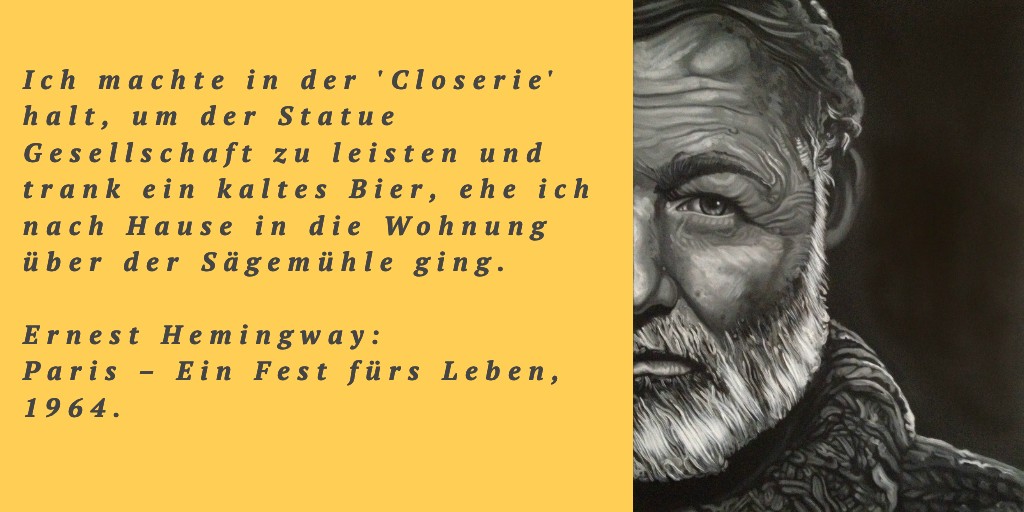
Ich machte in der ‚Closerie‘ halt, um der Statue Gesellschaft zu leisten und trank ein kaltes Bier, ehe ich nach Hause in die Wohnung über der Sägemühle ging.
Ernest Hemingway: Paris – Ein Fest fürs Leben, 1964.
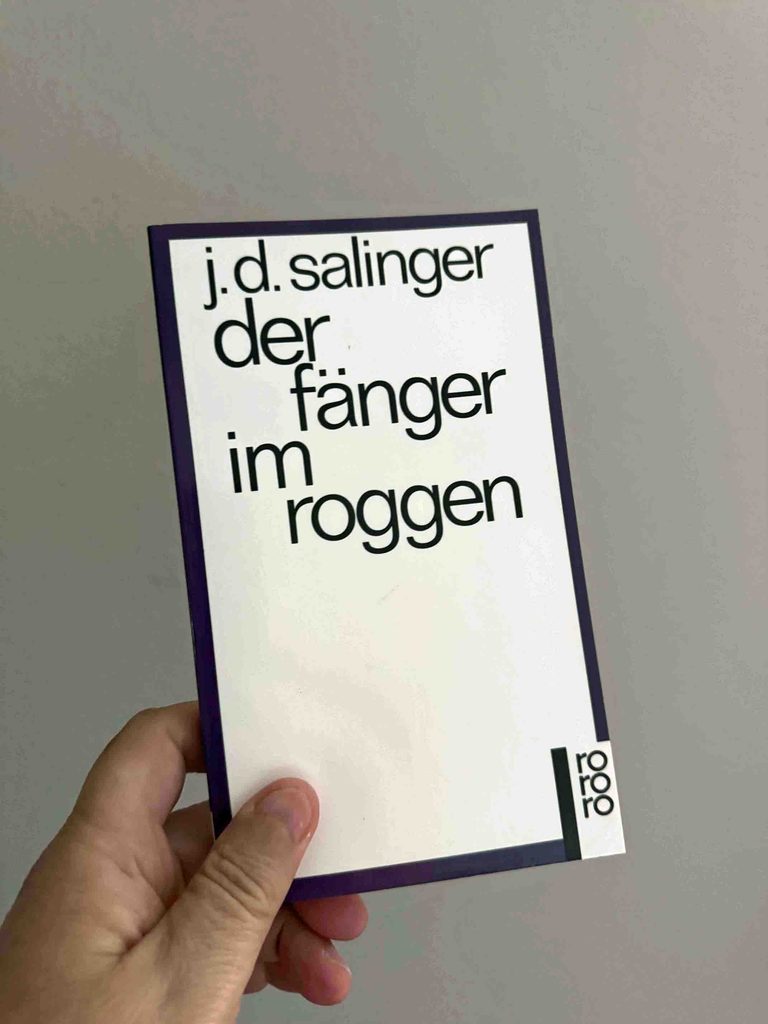
Eines der schönsten Werke der Weltliteratur. Der Fänger im Roggen. Von J. D. Salinger. Foto: Archiv Dr. Stock.
Dieser Weltliterat hat eine abenteuerliche Biografie. Jerome David Salinger wird am 1. Januar 1919 als Sohn einer jüdisch-litauischen Familie in New York geboren. Mit dem Verfasser von Filmkritiken verdient er erstes Geld. Danach geht er zur Armee. Wegen seiner guten Fremdsprachen-Kenntnisse wird er im Anschluss an die Grundausbildung 1943 dem Counter Intelligence Corps – dem militärischen Abwehrdienst – zugeteilt und bricht nach dem Kriegseintritt der Vereinigten Staaten in Richtung Europa auf.
Die brutalen Kämpfe im Hürtgenwald werden gerade für den feinsinnigen Salinger zum Wendepunkt seines Lebens. In den Schützengräben der Nordeifel erkennt der Mittzwanziger, dass er für den Krieg nicht gemacht ist. Vielmehr möchte Jerry sich der Literatur und den Künsten widmen. Auch an der Front schreibt er, wo immer sich die Möglichkeit dazu ergibt. In den Gefechtspausen wird er die ersten Kapitel seiner grandiosen Erzählung The Catcher in the Rye verfassen.
Ein persönlicher Lichtblick im Krieg: Der Nachwuchsautor trifft zweimal auf den schon arrivierten Ernest In Paris und in dem kleinen Eifeldorf Zweifall unterhalten sie sich stundenlang. Nach dem Krieg wird Salinger in einem Brief an Ernest offenbaren: Die Gespräche mit Dir im Hürtgenwald waren die einzigen hoffnungsvollen Momente in diesem ganzen Irrsinn. Der Idealtypus eines ungebundenen Schriftstellers, den Hemingway für den ehrgeizigen Neuling wie aus dem Lehrbuch verkörpert, gibt Salinger in den schweren Stunden an der Westfront Kraft und Hoffnung.
In der bitterkalten Nordeifel ist der empfindsame J. D. von Schreck und Elend nur so umgeben. Sein Vorgesetzter, ein in der Kompanie gefürchteter Bluthund und Säufer, hat es besonders auf den zarten Salinger abgesehen. Ohne Sinn befiehlt er dem Feldwebel, über Nacht eine Schützenmulde zu halten, obwohl Salinger nicht die richtige Kleidung für die klirrend kalte Winternacht dabei hat. Werner Kleeman, in Angst um das Leben des Freundes, findet J. D. in einem Drecksloch voller Eis und Schnee. Er steckt ihm eine Decke und ein Paar von seiner Mutter gestrickte Wollsocken zu.
Nach Ende des Zweiten Weltkriegs besucht Salinger das Konzentrationslager Kaufering IV-Hurlach, das kurz zuvor im April 1945 befreit worden ist. Der Hürtgenwald ist schon schrecklich gewesen, doch den Horror, den er in Oberbayern zu Gesicht bekommt, lässt sein Blut in den Adern gefrieren. Niemals hat er sich J. D. Salinger öffentlich zu seinen Erlebnissen in Deutschland geäußert.
Doch seine Tochter Margaret erinnert sich an eine Bemerkung ihres Vaters: You never really get the smell of burning flesh out of your nose entirely, no matter how long you live. Du bekommst nie wirklich den Geruch von brennendem Fleisch aus deiner Nase, egal wie lange du lebst. Vor dem Eintreffen der alliierten Streitkräfte sind geschwächte Häftlinge, die nicht auf einen Todesmarsch geschickt werden konnten, im KZ bei lebendigem Leib verbrannt worden.
The Catcher in the Rye, 1951 erstmals erschienen, ist Salingers Meisterwerk. Dieser einzige veröffentlichte Roman von ihm erreicht eine Auflage von über 65 Millionen Exemplaren. In Amerika kennt jedes Schulkind diese Erzählung um den 16-jährigen Holden Caulfield. Es ist ein Entwicklungsroman hin zum Erwachsenwerden. Der Protagonist schildert die zwiespältige Gefühlslage der Jugend und den schwierigen Weg, das eigene Ich zu finden.
Und auch hier findet sich ein Verbindung zur Nordeifel. Die erste deutsche Übersetzung von Der Fänger im Roggen stammt von Heinrich Böll, der bis zu seinem Tod in Langenbroich gewohnt hat, knapp dreißig Kilometer von Zweifall entfernt. So oder so, die blutigen Gefechte an der Siegfried-Linie haben Salinger zugesetzt.
Die Unbarmherzigkeit, die Jerome David Salinger im Hürtgenwald erlebt hat, führt zu
Hürtgen ist ein blutiges Gemetzel, wo es Pferdescheiße satt zu essen gab. Foto: W. Stock, August 2026.
Im Hürtgenwald bekommt Ernest Hemingway Dutzende gefallene Soldaten zu Gesicht. Heranwachsende Kerle, so alt wie sein von der Wehrmacht inhaftierter Sohn Jack. Blutjunge Burschen, die ihr ganzes Leben vor sich gehabt hätten. Und nun liegen sie wie Eisblöcke auf dem Frostboden der Nordeifel. Entstellt, verstümmelt, gefroren. Tot in einem Krieg, mehr als 8.000 Kilometer fern der Heimat. Auf das schreckliche körperliche und mentale Leid vermag Ernest anfänglich nur mit Zynismus zu reagieren.
Wir bekamen viel Ersatz, aber ich dachte, es sei einfacher, sie dort, wo man sie auslud, zu erschießen, anstatt dass man später versuchen musste, sie von dort zurückzuholen, wo sie getötet worden waren.
Der Schriftsteller, der den Krieg bislang mit romantischer Verklärung betrachtet, gerät im Angesicht der brutalen Realität ins Wanken. Bis zu diesem Moment ist Ernest fest von der Existenz eines „guten Krieges“ überzeugt – von einem Kampf, der zwar hart, aber kurz, gerecht und von bedingungsloser Kameradschaft geprägt ist.
Die Schlacht in der Nordeifel bricht ganz und gar mit jedem seiner Idealbilder. Die schiere Wucht dieses endlosen Gemetzels hinterlässt bei ihm eine tief sitzende Abscheu vor den Absurditäten des Krieges. Die Kampfhandlungen um die Siegfried-Linie sind ein monatelanges Blutbad im frostigen Wald, nur um ein paar Quadratkilometer Bäume unter Kontrolle zu bringen. Hürtgen ist ein tiefblutiges Gemetzel, wo es Pferdescheiße satt zu essen gab, bis man schwer verwundet ist oder getötet wird oder verrückt.
Erst Mitte Januar 1945 gewinnen die US-Truppen merklich an Boden. In der Ardennenoffensive, von deutscher Seite als Entlastung angelegt, verliert die Wehrmacht zahlreiche Soldaten und schwere Geländefahrzeuge, die für die Unterstützung der Westfront fehlen. Den GIs gelingt es daraufhin, den Hürtgenwald zu durchqueren. Nach erneuten heftigen Kämpfen fällt die Ortschaft Schmidt Anfang Februar 1945 endgültig an die US-Truppen.
Im weiteren Verlauf brechen die Stellungen der Wehrmacht nacheinander ein, woraufhin den alliierten Kräften der Durchbruch bis kurz vor Schleiden gelingt. Am 4. Februar fällt die Urfttalsperre in amerikanische Hand. Die Schwammenauel-Talsperre, die große Rurtalsperre, wird sechs Tage später erreicht und eingenommen. Damit ist der deutsche Widerstand in diesem Abschnitt endgültig gebrochen.
Die erbitterten Kämpfe um den Westwall haben fast ein halbes Jahr gedauert, bis Februar 1945 wird in der Nordeifel gefochten. Acht Infanterie-Divisionen und zwei Panzer-Divisionen werden im Hürtgenwald aufgerieben. Die amerikanischen Truppen verlieren 24.000 Soldaten, auf deutscher Seite fallen 13.000 Wehrmachtsangehörige.
In der Nordeifel bleibt ein riesiges Trümmerfeld zurück. Jülich und Düren liegen in Schutt und Asche, ebenso wie die kleinen Dörfer in der Umgebung. In den Hürtgenwald haben sich Schneisen aus Brandbomben und Sprengkörpern eingekerbt, Tausende Tote sind zu bergen. In den USA hat sich die Schlacht im Hurtgen Forest viel stärker ins Bewusstsein gepresst als in Deutschland. Für die Amerikaner sind die Kämpfe im Hürtgenwald die längste und verlustreichste Schlacht auf deutschem Boden.
Fast einen ganzen Monat hat der Schriftsteller die Schlacht rund um Hürtgen im Winter 1944 beobachtet. Am 4. Dezember kehrt Ernest Hemingway, erschöpft und niedergedrückt, nach Paris zurück. Der 45-Jährige hat sich in der frostklirrenden Winterlandschaft der Eifel eine schwere Lungenentzündung eingefangen, dazu plagen ihn andauernde Kopfschmerzen.
Hemingway ist nach dem 4. Dezember nicht endgültig aus dem Kriegsgeschehen heraus. Am 17. Dezember 1944 fährt er nach Luxemburg, um über die Ardennenoffensive zu berichten. Doch er ist
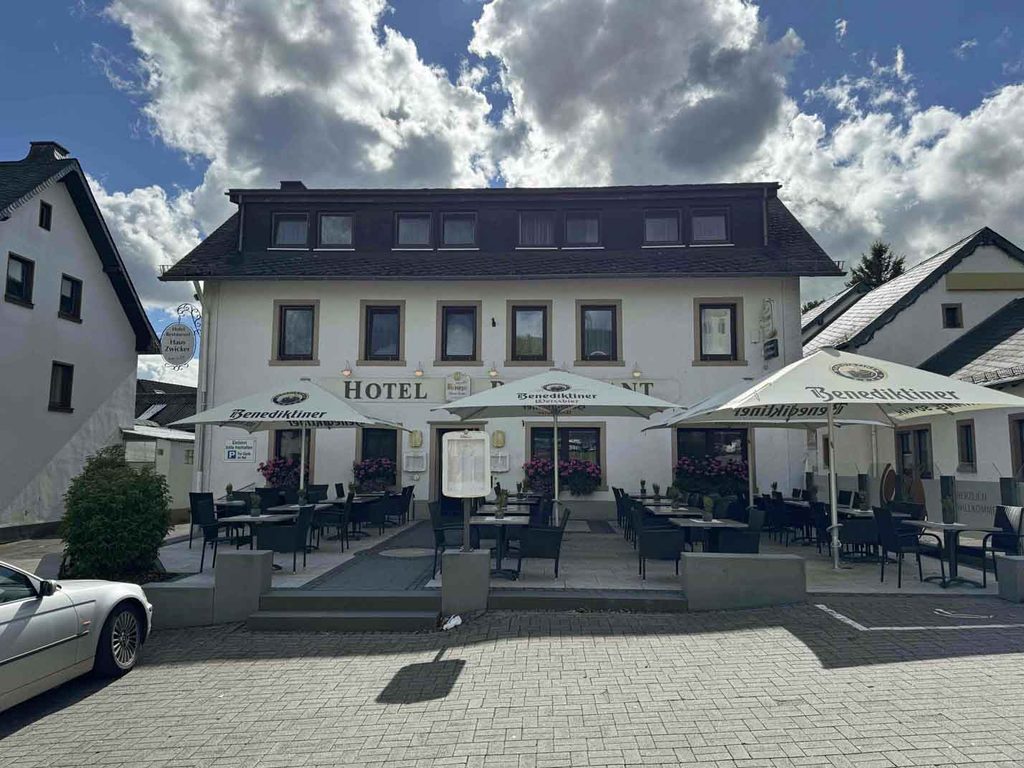
Etappenziel Bleialf: Das Hotel Zwicker diente im Herbst 1944 als Herz der US-Versorgung in der Schnee-Eifel. Nach dem Krieg wurde das Anwesen neu gebaut. Foto: W. Stock, August 2026.
Die Wehrmacht will die Front am Westwall halten, den die Alliierten Siegfried Line nennen. Zwischen Aachen und Prüm plant die US-Army, einen Teil dieser Schutzmauer aus Bunkern und Sperren zu überwinden, um bis zum Rhein vorstoßen zu können. Strategisch würde der Verlust des Rheinlandes die deutsche Abwehr entscheidend schwächen und das Ende der NS-Diktatur beschleunigen.
Am 8. September 1944 reist Ernest Hemingway über den belgischen Ort Sankt Vith und das nahegelegene Dorf Ouren an die Grenzlinie. Der Kriegsberichterstatter ist voller Erwartung, denn für seine Reportagen und den geplanten Roman benötigt er möglichst viele Eindrücke aus erster Hand. Er muss die Kampfhandlungen miterleben, um anschaulich darüber schreiben zu können. Ganz nah herangehen, nur so funktioniert seine Prosa.
Zwei Tage zuvor, am letzten Tag vor dem Einbruch des Schlechtwetters, waren wir am Ziel des Rattenrennens angelangt. Es war eine schöne Rattenjagd von Paris bis nach Le Cateau, mit erbitterten Kämpfen bei Landrecies, die nur wenige gesehen haben und an die sich noch weniger erinnern können. Dann waren die Pässe des Ardennenwaldes bezwungen worden, in einer Landschaft, die den Illustrationen zu Grimms Märchen glich, nur viel grimmiger.
Hemingway begibt sich zunächst nicht an die Frontlinie im Norden bei Aachen, sondern beginnt 80 Kilometer weiter südlich, mitten in der Schnee-Eifel. Ziel der US-Army ist es, von Belgien aus in der Westeifel die Siegfried-Linie aufzubrechen, um den Bodentruppen den Weg nach Köln und Koblenz zu ebnen. Im Grenzgebiet herrscht im Herbst ein raues und feuchtes Klima. In höheren Lagen ist es meist noch einige Grad kälter als im Flachland.
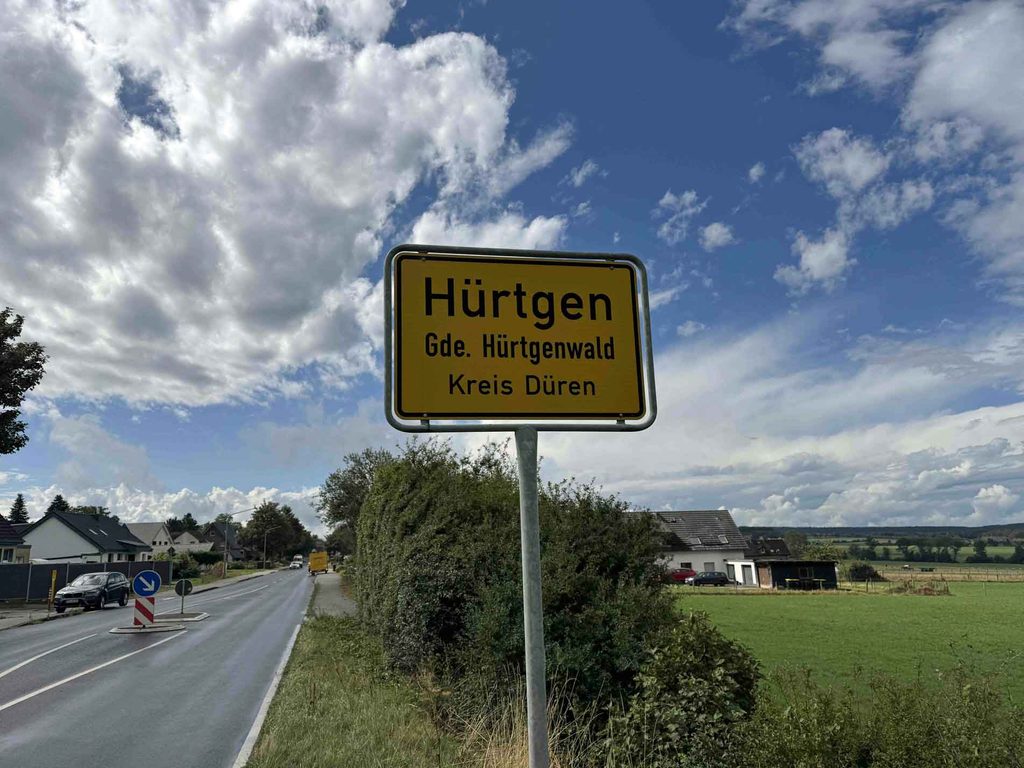
Mit der Frontverschiebung erreicht auch das Pressekorps das Territorium der Schnee-Eifel. Es ist Dienstag, der 12. September 1944. Um 04.27 Uhr setzt der Kriegsreporter seinen Fuß in das Land der Nazis. Das Dorf heißt Hemmeres, es ist die erste deutsche Ortschaft, die Hemingway im Zweiten Weltkrieg betritt. In dem winzigen Fleckchen, direkt am Grenzfluss Our, leben nur ein paar Dutzend Menschen, die ihre Bauernhöfe bewirtschaften.
Es wird Hemingways erste Begegnung mit den Deutschen während des Krieges. Alte Frauen und greise Männer laufen auf die Soldaten zu. Sie bringen Schnaps und trinken selbst aus den Flaschen, um zu zeigen, dass der Fusel nicht vergiftet ist. Andere kommen mit weißen Fahnen und erhobenen Händen. Die Wehrmacht hat sich nach Osten abgesetzt und zerstört auf dem Rückzug die noch intakte Infrastruktur.
Ein uraltes Bauernhaus in Schweiler wird zum ersten Quartier Hemingways auf deutschem Boden. Das Haus verfügt über kein fließendes Wasser, kein Badezimmer, keinen Strom, keine Heizung. Überstürzt haben Soldaten der Wehrmacht das trostlose Gebäude verlassen.Der US-Trupp richtet sich behelfsmäßig ein, unter dem Lichtschein einer Öllampe geht es am Abend feuchtfröhlich zu. Es gibt ein gutes Essen, das die verbliebenen Bauern der Umgebung auftreiben. Auch Wein und Cognac werden den Amerikanern aufgetischt.
In Schweiler stoßen die Soldaten auf Eifel-Bewohner, die nicht geflohen sind. Greise Männer und Frauen, kleine Kinder. Und Ernest wundert sich. Diese Nazi-Deutschen sehen seinem Großvater oder anderen Großvätern gar nicht so unähnlich. Und auch die Kinder sind Kinder wie in sonstigen Ecken der Welt.
Im drei Kilometer entfernten Bleialf richtet die Army Dienstleistungen ein, die auch im Krieg vonnöten sind. Am Bahnhof bietet der Zahnarzt der Einheiten seine Dienste an und in der Pfarrkirche hält der Truppen-Geistliche für die GIs Messen ab. Das Hotel Zwicker wird zur Feldküche hergerichtet. Im Hinterhof des Gasthauses werden von den Soldaten die Mahlzeiten eingenommen. Ernest Hemingway kommt
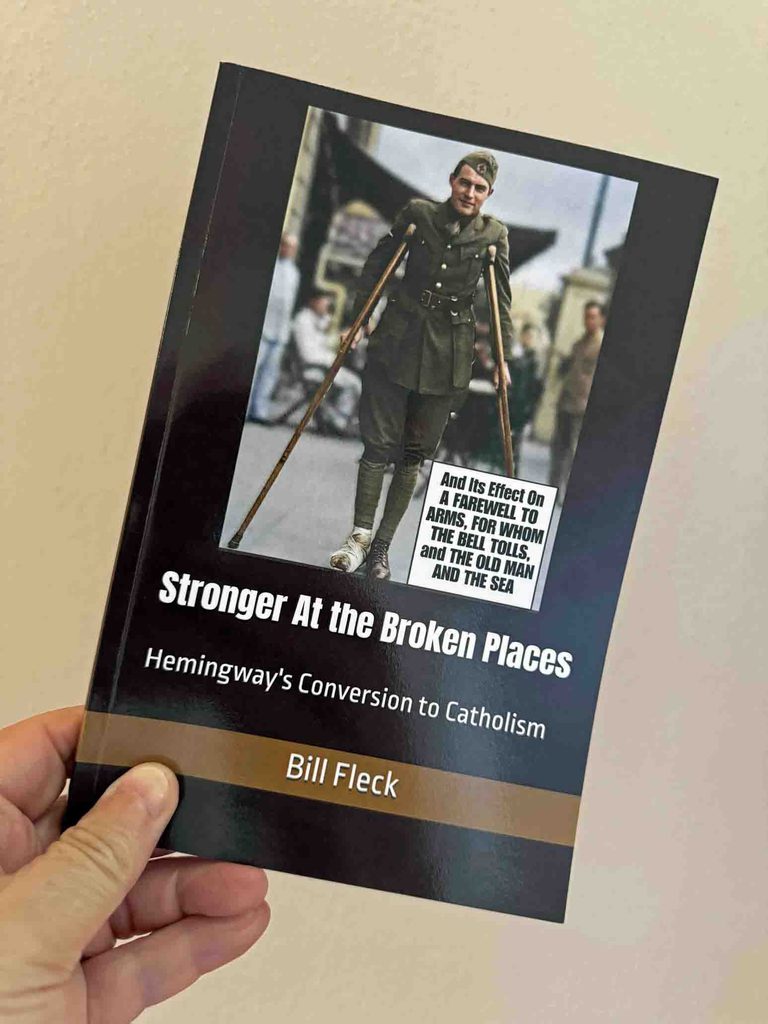
Bill Fleck’s new book explores how Ernest Hemingway found his way to Catholicism. Photo: Dr. Stock Archive, 2026
The public image of the writer Ernest Hemingway is clearly defined: an adventurer, a man who enjoyed life’s pleasures, a womanizer, and a man of action. A rough-and-tumble brawler—whether at war, on safari, or at a bar counter. Yet this superficial view falls short, overlooking his inner self — the contemplative and spiritual Hemingway.
Bill Fleck’s book, Stronger at the Broken Places: Hemingway’s Conversion to Catholicism, fills precisely this gap. Originally written as a master’s thesis under the guidance of renowned Hemingway scholar H. R. Stoneback, the work thankfully sheds light on the Nobel laureate’s life of faith.
Ernest Hemingway – born in 1899 in Oak Park, near Chicago – grew up in a household shaped by Congregationalism. This faith community originated in the English Puritan movement and is deeply rooted in the Calvinist tradition, characterized by a strict belief in God, ambition, and industriousness. As the years went by, the young Hemingway found the rigid principles of his Protestant suburban family stifling. Once he left home, he turned away from that moral world.
A severe wound sustained on the Venetian front during World War I eventually drew him closer to Catholicism: while in an Italian field hospital in July 1918, he received the Anointing of the Sick and was baptized into the Catholic faith. His marriage in May 1927 to his second wife, Pauline Pfeiffer — who came from a devoutly Catholic family – initially strengthened his religious ties.
During the Spanish Civil War, however, Ernest distanced himself from the faith – largely due to the Spanish Catholic Church’s support for the coup leader General Franco. During World War II, following the brutal Battle of Hürtgen Forest, Hemingway once again sought solace in faith. The horrors of war on the German Western Front near Aachen during the winter of 1944–45 ultimately led him back to the world of the Catholic faith.
After 1945, a quiet Catholicism shaped Hemingway’s daily life – not in an ostentatious way, but rather privately and inwardly. At his Cuban estate, Finca Vigía, the tradition of eating fish on Fridays was observed. It went beyond mere outward observances: the exiled Basque priest Father Andrés Untzaín became a close friend, confessor, and spiritual guide to him in Cuba. During his many travels, Hemingway regularly visited cathedrals – often to light candles for deceased friends and relatives.
Ernest did not make a public show of his Catholicism, preferring instead to cultivate his image as a rough-and-tumble brawler. Yet, correspondence with colleagues and priests bears witness to the true state of Hemingway’s spiritual life. It is no coincidence, then, that the American felt most at home in staunchly Catholic countries like Italy, Spain, and Cuba.
Bill Fleck deserves credit for having examined and compiled these biographical traces. In the final third of his book, the American educator explores
Wir verwenden Technologien wie Cookies, um Geräteinformationen zu speichern und/oder darauf zuzugreifen. Wir tun dies, um das Surferlebnis zu verbessern und um (nicht) personalisierte Werbung anzuzeigen. Wenn du diesen Technologien zustimmst, können wir Daten wie das Surfverhalten oder eindeutige IDs auf dieser Website verarbeiten. Wenn du deine Zustimmung nicht erteilst oder zurückziehst, können bestimmte Funktionen beeinträchtigt werden.
Funktional
Immer aktiv
Die technische Speicherung oder der Zugang ist unbedingt erforderlich für den rechtmäßigen Zweck, die Nutzung eines bestimmten Dienstes zu ermöglichen, der vom Teilnehmer oder Nutzer ausdrücklich gewünscht wird, oder für den alleinigen Zweck, die Übertragung einer Nachricht über ein elektronisches Kommunikationsnetz durchzuführen.
Vorlieben
Die technische Speicherung oder der Zugriff ist für den rechtmäßigen Zweck der Speicherung von Präferenzen erforderlich, die nicht vom Abonnenten oder Benutzer angefordert wurden.
Statistiken
Die technische Speicherung oder der Zugriff, der ausschließlich zu statistischen Zwecken erfolgt.Die technische Speicherung oder der Zugriff, der ausschließlich zu anonymen statistischen Zwecken verwendet wird. Ohne eine Vorladung, die freiwillige Zustimmung deines Internetdienstanbieters oder zusätzliche Aufzeichnungen von Dritten können die zu diesem Zweck gespeicherten oder abgerufenen Informationen allein in der Regel nicht dazu verwendet werden, dich zu identifizieren.
Marketing
Die technische Speicherung oder der Zugriff ist erforderlich, um Nutzerprofile zu erstellen, um Werbung zu versenden oder um den Nutzer auf einer Website oder über mehrere Websites hinweg zu ähnlichen Marketingzwecken zu verfolgen.